Updated August 20, 2026
FTC personalized pricing scrutiny moved forward on August 19, 2026, when the Federal Trade Commission released a draft enforcement policy statement. The proposal targets situations where businesses use personal data to set individualized prices without adequate disclosure.
The action does not ban personalized pricing nationwide. It signals how the FTC may apply existing consumer-protection law when shoppers are not told why prices vary.
Key Facts
- The FTC released its personalized pricing proposal on August 19, 2026.
- The Commission voted 2-0 to authorize publication for public comment.
- The FTC says undisclosed use of personal data for pricing could violate federal consumer-protection law.
- The proposal does not create a blanket federal ban on personalized pricing.
- A 30-day public comment period begins after publication in the Federal Register.
What the FTC Personalized Pricing Proposal Says
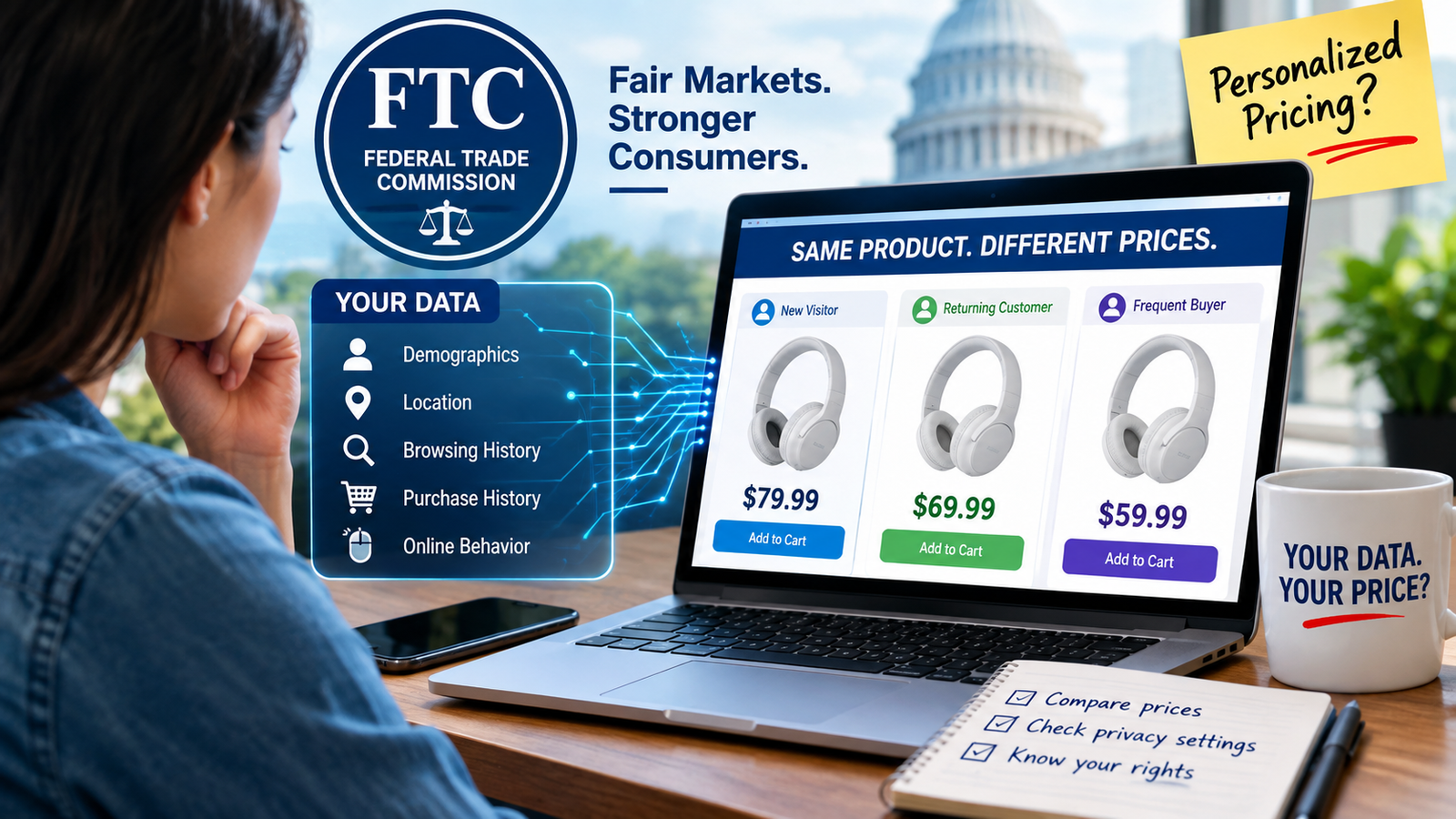
The FTC’s August 19 announcement defines personalized pricing as using personal data to estimate what an individual might pay.
FTC Chairman Andrew Ferguson said the agency cannot ban the practice in every circumstance. However, businesses may risk violating the FTC Act when they fail to disclose material pricing practices.
The draft focuses on deception rather than declaring all individualized pricing unlawful. That legal distinction matters because the statement is not a final rule.
What Personal Data Could Influence a Price?
The FTC has studied surveillance pricing since 2024. Its earlier research found intermediaries can use location, demographics, browsing activity, shopping history, and other behavioral information.
The agency’s surveillance pricing study also described data such as mouse movements and abandoned shopping-cart items.
Those signals can help businesses estimate a shopper’s willingness to pay or likelihood of comparison shopping. The FTC has not said every retailer uses these methods.
Who Could Be Affected?
The issue is broader than one retail category. FTC research has examined pricing technology used across sectors including groceries, apparel, and other consumer goods.
In January 2025, FTC staff said the intermediaries it reviewed worked with at least 250 clients. That finding showed the technology can operate behind retailers rather than only through consumer-facing brands.
Why FTC Personalized Pricing Matters for Shoppers
Traditional dynamic pricing often changes for everyone based on demand, inventory, location, or time. Personalized pricing can go further by adjusting what a specific consumer sees.
That difference could make comparison shopping harder. Two people may believe they are seeing a standard listed price even when data-driven systems treat them differently.
The FTC’s concern is especially focused on disclosure. If a retailer implies that a price is static, undisclosed individualized pricing could create a misleading impression.
What Has Not Changed
No new nationwide personalized pricing ban took effect on August 19. The Commission released a draft enforcement policy statement for public input.
The FTC also has not concluded that every fully disclosed personalized pricing practice is unfair. Its current proposal centers on how existing law may apply to undisclosed data use.
Consumers should therefore avoid claims that personalized pricing is now illegal. The legal status depends on the facts, disclosures, and conduct involved.
The FTC personalized pricing proposal also does not establish how often individual retailers currently use these systems.
What Consumers Can Do Now
Start by comparing prices before completing larger purchases. Check the same product through another browser, device, or account when practical.
Private browsing or a virtual private network may reduce some signals available to a retailer. The FTC itself noted those options, but neither method guarantees the same price.
Review retailer privacy notices when price differences appear unusual. Save screenshots showing the product, time, quoted price, fees, and account status.
If a business appears to misrepresent its pricing, consumers can use the FTC’s official ReportFraud portal. A report does not guarantee an investigation, refund, or enforcement action.
Do Not Confuse Personalized Pricing With Every Price Change
A changing airline fare, hotel rate, delivery fee, or online price is not automatically personalized pricing. Prices can move because of inventory, demand, promotions, or location.
The key issue is whether personal information influenced an individualized price and whether the business adequately disclosed that practice. Consumers usually cannot determine that from price movement alone.
When the Public Can Comment
The FTC said the public will receive 30 days to comment after the draft statement appears in the Federal Register. The agency’s announcement does not provide a fixed calendar deadline.
Readers should monitor the FTC’s official personalized pricing policy page for the formal notice and related documents.
Bottom Line
FTC personalized pricing enforcement is moving toward clearer disclosure expectations, not a universal pricing ban. The agency is asking whether businesses mislead shoppers when personal data quietly affects individual prices.
For consumers, the practical response is simple: compare offers, preserve unusual price evidence, and verify claims through official sources. The next formal step is the federal public-comment process.
This article provides general consumer information. It is not legal or financial advice.
Official Source Stack
Direct sources supporting the material claims in this report.
- Official agency release FTC's August 19 announcement
- Official agency release surveillance pricing study
- Official agency release FTC's official ReportFraud portal
- Official agency release FTC's official personalized pricing policy page
This report provides general news and educational information for a U.S. audience. It is not individualized financial, credit, legal, tax, insurance or investment advice. Verify current procedures through the linked official sources.