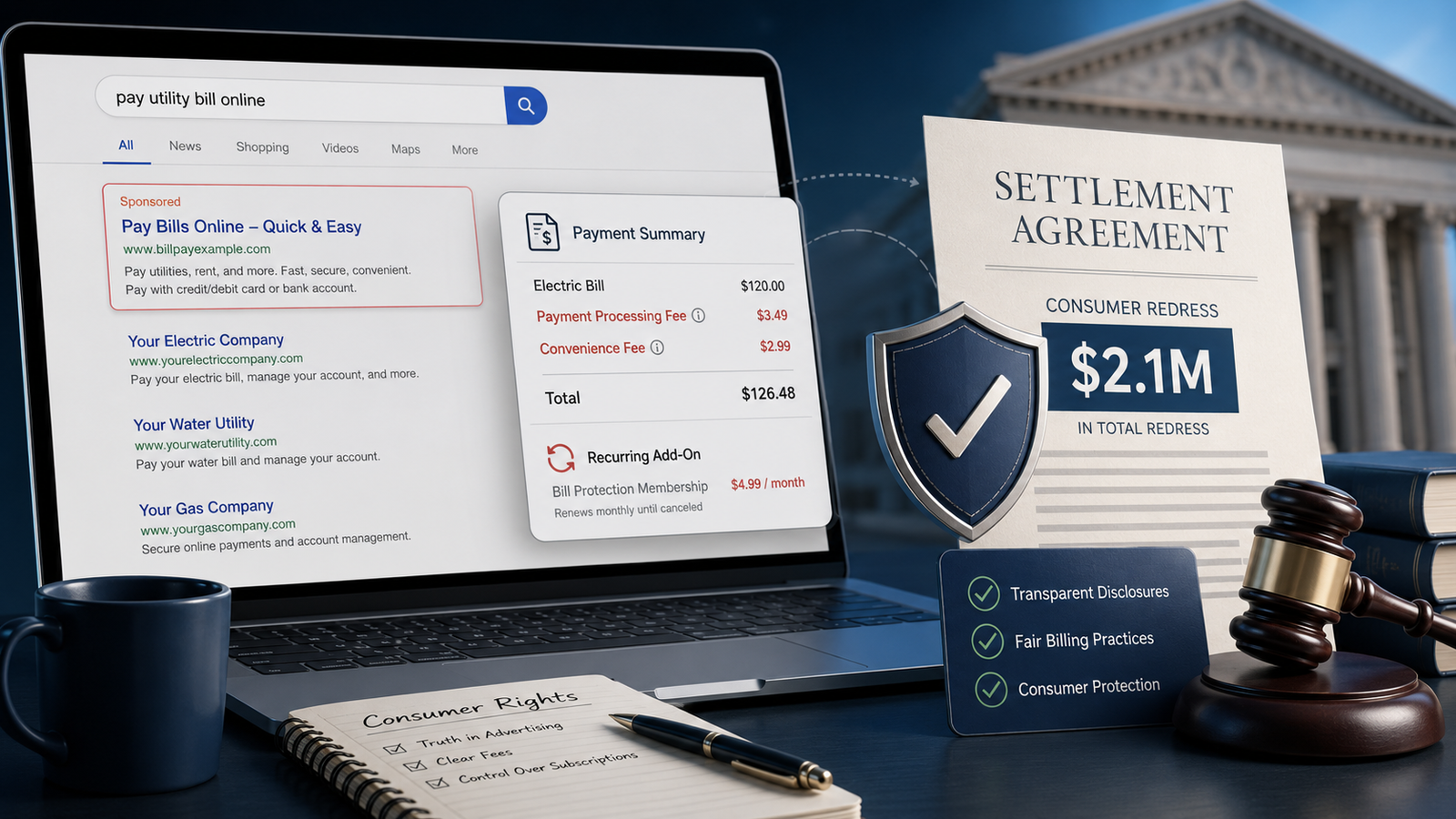
Doxo FTC settlement terms would require the bill-payment company to pay $2.1 million for consumer redress. Refund eligibility and timing have not been announced.
Key Facts
- The proposed order requires Doxo to pay $2.1 million for potential consumer redress.
- The FTC alleged misleading biller affiliations, unclear fees, and recurring subscription charges.
- No Doxo refund application or eligibility list has been announced.
What Happened
On August 17, the Federal Trade Commission announced a proposed settlement with Doxo. The agreement also covers co-founders Steve Shivers and Roger Parks.
Under the proposed order, Doxo would pay $2.1 million for consumer redress. The agency alleged misleading search ads, unclear fees, and recurring subscription charges.
The FTC alleged that paid ads and biller branding made Doxo appear officially connected to billers. The agency also alleged that many billers had not authorized Doxo to collect payments.
A federal court found violations of the Restore Online Shoppers’ Confidence Act. The findings concerned subscription disclosures and express consumer consent.
The remaining claims are allegations resolved through settlement. The stipulated order says defendants neither admit nor deny those allegations, except jurisdictional facts.
The proposed order was filed in the Western District of Washington. It becomes enforceable after the district judge approves and signs it.
What the Doxo FTC Settlement Changes—and What It Does Not
What would change after court approval
- Doxo would pay $2.1 million to the FTC in three scheduled payments.
- The FTC may use that money for consumer redress and related administration costs.
- Doxo could not misrepresent its relationship with a biller.
- Fees, total costs, subscription terms, and charge timing must be clearly disclosed.
- Doxo must obtain express informed consent before recurring charges begin.
- Cancellation must be simple and no harder than enrollment.
What does not change yet
- The FTC has not opened a Doxo refund claims process.
- The agency has not identified eligible consumers, covered dates, or payment amounts.
- The announcement does not guarantee a refund for every Doxo user.
- The settlement does not cancel any legitimate utility, loan, medical, or government bill.
- Consumers still must confirm that each biller received and credited their payment.
Who the Doxo FTC Settlement May Affect
The settlement may matter to consumers who used Doxo to pay household or personal bills. Examples include utilities, car loans, medical bills, insurance, telecommunications, tolls, and government charges.
It may especially matter to people who reached Doxo through a paid search advertisement. The FTC alleged some ads appeared to represent a biller’s official payment channel.
Consumers may also be affected if they paid delivery fees or received recurring subscription charges. The FTC’s 2024 complaint announcement also alleged that some payments reached billers late.
Not every Doxo customer will necessarily qualify for relief. The FTC has not published eligibility criteria.
Consumer-Safe Next Steps
1. Do not pay anyone to request an FTC refund. No official Doxo claims process has been announced. Monitor the FTC refund page for verified updates.
2. Review your statements. Check bank and card statements for Doxo delivery fees or recurring subscription charges. Compare each charge with your Doxo receipts.
3. Confirm whether your bill was credited. Contact the biller through its official website or statement. Ask whether the payment posted before sending another payment.
4. Save supporting records. Keep payment confirmations, emails, screenshots, statements, cancellation requests, and any late-fee notices. These records may support a refund or dispute.
5. Cancel unwanted subscriptions directly. Follow the service’s cancellation instructions and save written confirmation. Continue checking statements for later charges.
6. Dispute unauthorized charges promptly. Contact your card issuer or bank immediately. The CFPB says written credit card billing-error notices generally must arrive within 60 calendar days.
For unauthorized bank-account transactions, notify the bank immediately. Federal protections may depend on how quickly the problem is reported.
7. Use the biller’s verified payment channel. Type a known web address directly into your browser. The FTC advises consumers to scroll past paid search advertisements.
8. Report suspected misconduct. Submit a report through ReportFraud.ftc.gov. Contact the CFPB when an unresolved issue involves a bank or credit card provider.
Unresolved Questions
The FTC has not explained how it will identify consumers for possible redress. It also has not announced whether consumers must submit claims.
Covered dates, qualifying fees, and individual payment amounts remain unknown. The agency has not said whether subscription charges and delivery fees will receive equal treatment.
The district judge must still approve and sign the stipulated order. The timing of that step remains unclear.
Official Source Stack
Direct sources supporting the material claims in this report.
- Official agency release Federal Trade Commission announced a proposed settlement
- Official agency release stipulated order
- Official agency release FTC’s 2024 complaint announcement
- Official agency release FTC refund page
This report provides general news and educational information for a U.S. audience. It is not individualized financial, credit, legal, tax, insurance or investment advice. Verify current procedures through the linked official sources.