Updated
A fake debt collector who posed as a local sheriff’s deputy and an attorney defrauded more than 500 people across the United States of $420,812.92, according to federal prosecutors. Nicholas Janes was sentenced on August 21, 2026, to five years’ probation after previously pleading guilty to mail fraud. The case offers a practical warning for anyone pressured to pay an unfamiliar debt under threats of arrest or criminal charges.
Key Facts
- DOJ says Nicholas Janes victimized more than 500 people for a total of $420,812.92.
- He claimed to be a local sheriff’s deputy and threatened victims with criminal charges if they did not immediately pay alleged debts.
- Janes also pretended to be an attorney working for fictitious law firms.
- He pleaded guilty to mail fraud on April 16, 2025.
- A federal judge sentenced him to five years’ probation on August 21, 2026.
How the fake debt collector scheme worked
The U.S. Attorney’s Office for the Western District of New York says Janes contacted people around the country by telephone and told them they owed money on alleged unpaid loans.
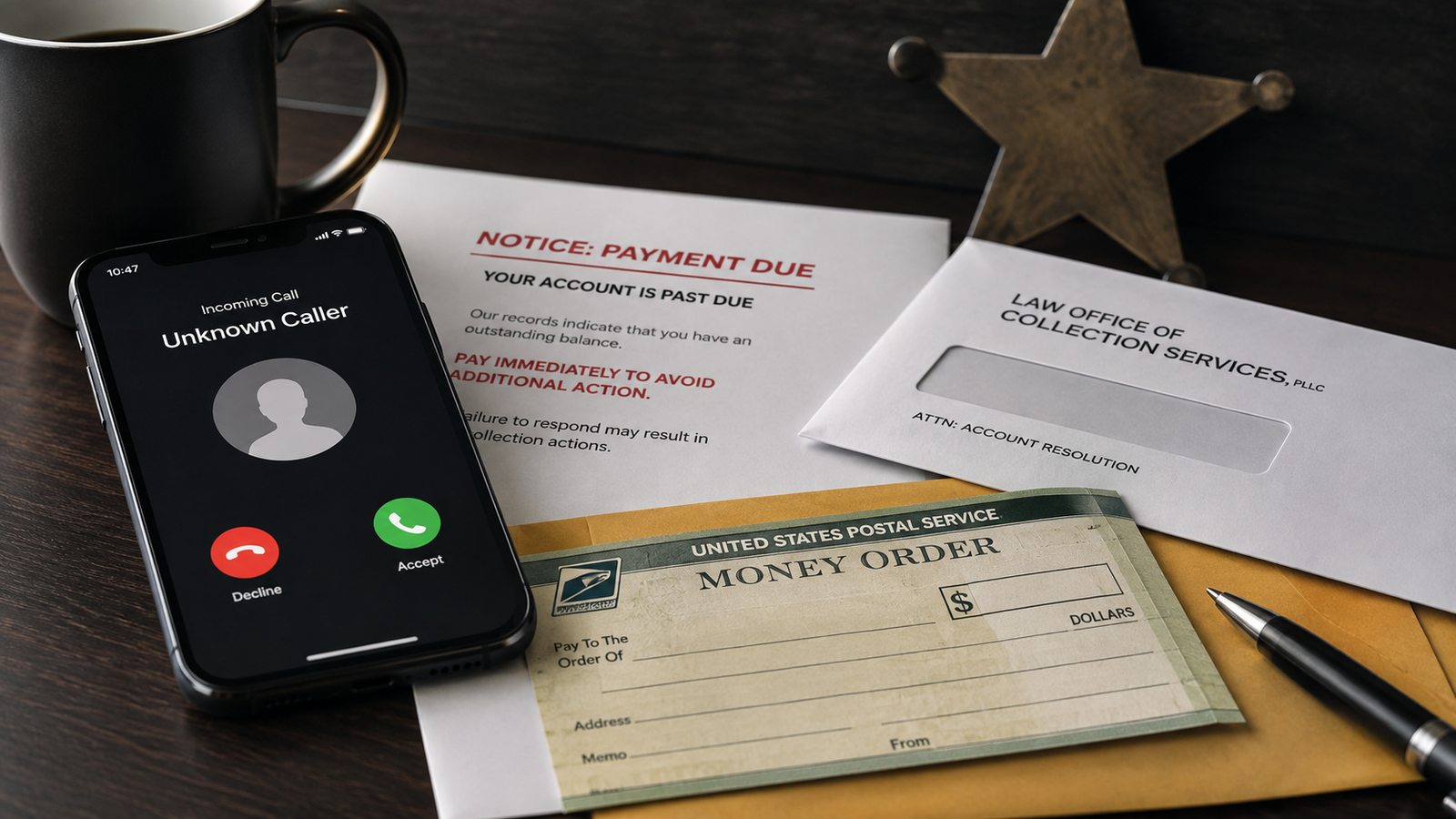
He sometimes claimed he was a local sheriff’s deputy. Victims were threatened with criminal charges unless they immediately paid the alleged debt. At other times, Janes pretended to be an attorney working for fictitious law firms, making the collection demand appear legitimate.
DOJ says victims were instructed to buy USPS money orders payable to Janes and send them by overnight delivery through the Postal Service, FedEx or UPS to addresses he controlled.
The investigation began after law enforcement noticed numerous suspicious USPS Express Mail envelopes being delivered to a Buffalo address in May 2023. The envelopes came from people across the country and were addressed to variations of Janes’s name or apparent law offices.
Names associated with the debt collection scheme
Federal prosecutors identified several names that appeared repeatedly when investigators searched consumer complaint databases and reviewed mail connected with the scheme.
- Nicholas Janes
- Nicholas James
- The Nichols Law Group
- The Nicholas Law Group
- Variations of The Offices of Pachulski, Mueller and Barnes
DOJ also says Janes controlled business mailboxes in Ann Arbor, Michigan, where mail generated by the scheme was received and then forwarded to his Buffalo residence.
A similar business name by itself is not proof that an unrelated person or company was involved. Consumers should compare the full contact information, communications and payment instructions before drawing conclusions.
What changed on August 21
This case is not at the allegation stage. Janes pleaded guilty to mail fraud in April 2025, and U.S. District Judge John L. Sinatra Jr. sentenced him on August 21, 2026, to five years’ probation.
The new sentencing announcement is the material development. DOJ’s August 21 release does not announce a new consumer refund process, restitution portal or claims deadline. Consumers should not assume that the $420,812.92 figure represents money currently available for distribution.
Fiscal Wire News also found an inconsistency in DOJ’s own releases. The April 16, 2025 plea announcement listed Janes as age 26, while the August 21, 2026 sentencing announcement lists him as age 40. Because those primary records conflict, this article does not state his age.
Fake debt collector warning signs
The tactics described in this case align closely with current federal guidance on fake debt collector scams.
The Consumer Financial Protection Bureau’s debt collection scam guidance says a legitimate collector should be able to provide its company name, mailing address and information about the debt it claims you owe.
Warning signs include refusing to provide identifying information, demanding sensitive financial details, threatening criminal charges or pressuring someone to pay a debt they do not recognize.
A threat of arrest deserves particular scrutiny. The CFPB says a debt collector cannot claim that you will be arrested simply because you fail to pay a consumer debt. A real lawsuit or court order is different and should never be ignored.
What to do before paying an unfamiliar debt
- Ask who is calling. Get the collector’s name, company name, street address, telephone number and professional license number if your state requires one.
- Request information about the debt. Ask for the original creditor, the amount allegedly owed and information explaining how to dispute the debt.
- Verify independently. Do not rely on a phone number, email address or website supplied only by the caller. Contact the original creditor using independently verified information.
- Do not pay because someone threatens arrest. A demand for immediate payment combined with claims of being a sheriff, police officer or government representative is a major warning sign.
- Preserve evidence. Save voicemails, texts, emails, envelopes, caller numbers, payment requests and transaction records.
Even when a collector behaves improperly, a legitimate underlying debt does not automatically disappear. Verification helps separate an actual debt from a fraudulent collection attempt.
Where to report a suspected debt collection scam
People who believe a collector is using deceptive or abusive tactics can submit information through the CFPB consumer complaint portal.
Suspected scams can also be reported through the Federal Trade Commission’s ReportFraud service. Keep any confirmation number and copies of the information submitted.
Bottom line
The latest development in this fake debt collector case is a final criminal sentencing: five years’ probation after Janes pleaded guilty to mail fraud. DOJ says more than 500 people collectively lost $420,812.92.
The consumer lesson extends beyond this case. Someone who claims to be law enforcement, threatens criminal charges and demands immediate payment for an unfamiliar debt should not be trusted based on the call alone. Verify the collector and the debt through independent channels before sending money.
Editorial disclaimer: Fiscal Wire News provides news and general consumer information, not legal or financial advice. Debt-collection rights and remedies can depend on the type of debt, collector, state law and individual circumstances.
Official Source Stack
Direct sources supporting the material claims in this report.
- Official agency release U.S. Attorney's Office for the Western District of New York
- Official agency release Consumer Financial Protection Bureau's debt collection scam guidance
- Official agency release CFPB consumer complaint portal
- Official agency release Federal Trade Commission's ReportFraud service
This report provides general news and educational information for a U.S. audience. It is not individualized financial, credit, legal, tax, insurance or investment advice. Verify current procedures through the linked official sources.