Published: September 4, 2026
Last fact-checked: September 4, 2026
Status: FinCEN alert and financial trend analysis published; no consumer refund or claims program announced.
Consumer reporting deadline: No special deadline was announced. FinCEN urges suspected victims to contact their financial institution and law enforcement immediately.
The FinCEN crypto scam alert identifies approximately $12.7 billion in financial activity tied to suspected digital asset investment scams. FinCEN derived that figure from 33,904 Bank Secrecy Act reports filed from September 8, 2023, through December 31, 2025. It is not a confirmed victim-loss total. Anyone who recently sent money should stop further transfers, contact the financial institution or crypto platform immediately, and preserve the transaction details for an official report.
Key Facts
- FinCEN published its analysis and Alert FIN-2026-Alert005 on September 3, 2026.
- The agency reviewed 33,904 Bank Secrecy Act reports filed between September 8, 2023, and December 31, 2025.
- The reports described about $12.7 billion in financial activity tied to suspected scams, not adjudicated losses.
- Reported targets included people of all ages across all 50 states and several U.S. territories.
- FinCEN urges victims to contact their financial institution promptly and report to FBI IC3 and/or the nearest U.S. Secret Service field office.
What the $12.7 Billion Figure Means
The September 3 FinCEN announcement describes reported financial activity associated with suspected digital asset investment scams. It does not say $12.7 billion has been proven stolen, recovered or made available for restitution.
| FinCEN finding | What it does not establish |
|---|---|
| 33,904 Bank Secrecy Act reports | 33,904 separate victims or criminal cases |
| Approximately $12.7 billion in reported financial activity | A verified victim-loss total, recovery fund or court judgment |
| Targets across every state and several territories | Equal losses or identical scam patterns in every jurisdiction |
| Reports filed through December 31, 2025 | Transactions that all occurred on September 3, 2026 |
Bank Secrecy Act reports provide financial intelligence for review and possible investigation. They are not criminal judgments or individualized eligibility decisions.
How Digital Asset Investment Scams Build Trust
FinCEN says operators may use assumed identities to pose as romantic partners, new friends or business contacts. Fake websites and mobile applications can imitate legitimate investment services.
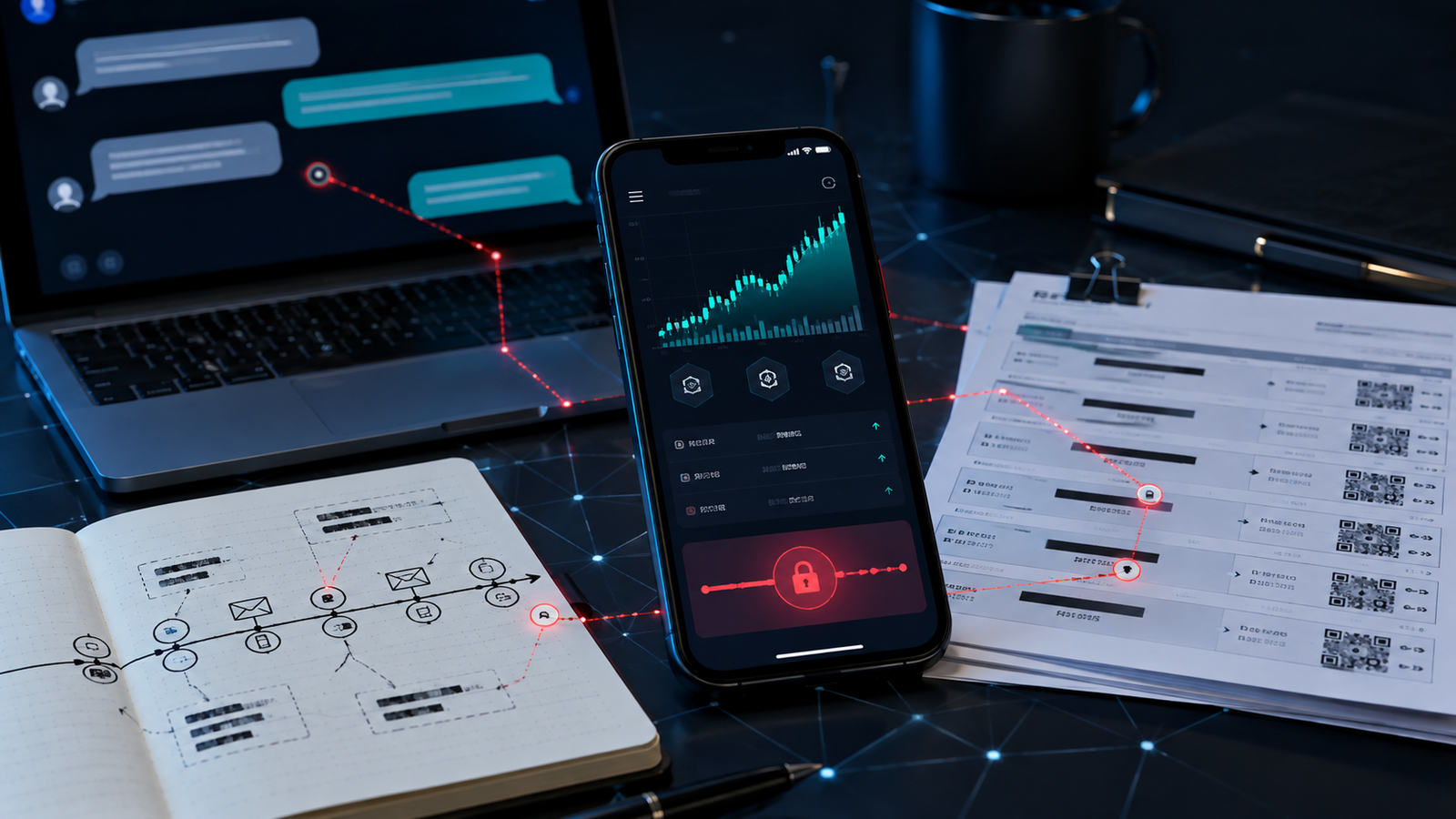
The FBI describes a common progression: an unsolicited contact builds trust, introduces a crypto investment, and directs the target to a controlled platform displaying fictitious profits. When the person tries to withdraw, the operator may demand additional taxes, penalties or fees.
| Stage | Warning sign | Record to save |
|---|---|---|
| Relationship building | A stranger quickly moves the conversation toward trust or investing | Profile, phone number, username and message history |
| Platform introduction | A contact supplies a specific website, app or wallet | URL, app name, screenshots and download source |
| Displayed returns | The dashboard shows unusually steady or guaranteed gains | Account screens, statements and claimed balances |
| Withdrawal attempt | More money is demanded for taxes, verification or release | Payment request, wallet address and transaction instructions |
What FinCEN Changed—and What It Did Not
FinCEN issued Alert FIN-2026-Alert005 to help financial institutions identify and report activity linked to overseas scam centers. Its official SAR key-terms page assigns the term FIN-2026-SCAMCENTERS for related filings.
The alert is directed mainly to financial institutions. It does not create a consumer reimbursement right, guarantee an account freeze, declare every crypto transfer suspicious or announce arrests, convictions or a restitution fund.
What to Do After Sending Money
- Stop additional payments. Do not send a supposed tax, penalty or withdrawal fee.
- Contact the financial institution or exchange immediately. Use a verified number or app and ask for its fraud team. Request review of any available recall, hold or account-protection option; reversal is not guaranteed.
- File an FBI report. Use the official Internet Crime Complaint Center.
- Preserve transaction identifiers. The FBI’s cryptocurrency scam reporting guidance asks for the asset type, amount, date and time, wallet addresses, and transaction ID or hash.
- Keep the complete contact trail. Preserve messages, emails, profile names, phone numbers, URLs, app files and screenshots.
- Consider contacting the Secret Service. FinCEN also directs victims to the nearest U.S. Secret Service field office.
- Secure exposed accounts. Change passwords through official sites and contact the relevant institution if credentials or identification documents were shared.
Recovery Claims Can Become a Second Scam
FinCEN’s Rapid Response Program can coordinate with law enforcement and foreign financial-intelligence partners when reported funds may be stopped abroad. It is not a public refund application and does not guarantee recovery.
The FBI warns that fake law firms and crypto recovery services target people who already lost money. Fiscal Wire’s FBI impersonation scam guide explains independent verification of official-sounding contacts. Do not pay an advance fee or provide wallet credentials to an unsolicited recovery contact. IC3 says it does not partner with private law firms or crypto services to recover funds.
What the FinCEN Crypto Scam Alert Does Not Prove
- It does not prove that $12.7 billion was stolen from individual victims.
- It does not identify 33,904 unique victims.
- It does not announce arrests, convictions or a restitution order.
- It does not create a consumer claims portal or payment deadline.
- It does not guarantee that a bank, exchange or agency can reverse a transfer.
Bottom Line
The FinCEN crypto scam alert documents a nationwide pattern of suspected activity and gives financial institutions reporting guidance. For households: stop further transfers, alert the financial provider, preserve blockchain and communication records, and report through IC3 or the Secret Service.
This article provides general consumer news and fraud-prevention information. It does not determine whether a transaction is fraudulent, guarantee recovery or provide individualized legal, investment or financial advice.
Official Source Stack
Direct sources supporting the material claims in this report.
- Official agency release September 3 FinCEN announcement
- Official agency release FBI describes a common progression
- Official agency release SAR key-terms page
- Official agency release official Internet Crime Complaint Center
This report provides general news and educational information for a U.S. audience. It is not individualized financial, credit, legal, tax, insurance or investment advice. Verify current procedures through the linked official sources.