Corrected August 23, 2026: An earlier version of this article described the Credit Glory operation as permanently shut down and suggested consumers should await court-ordered refunds. The FTC case is pending, the court order is temporary, and no consumer refund program has been announced.
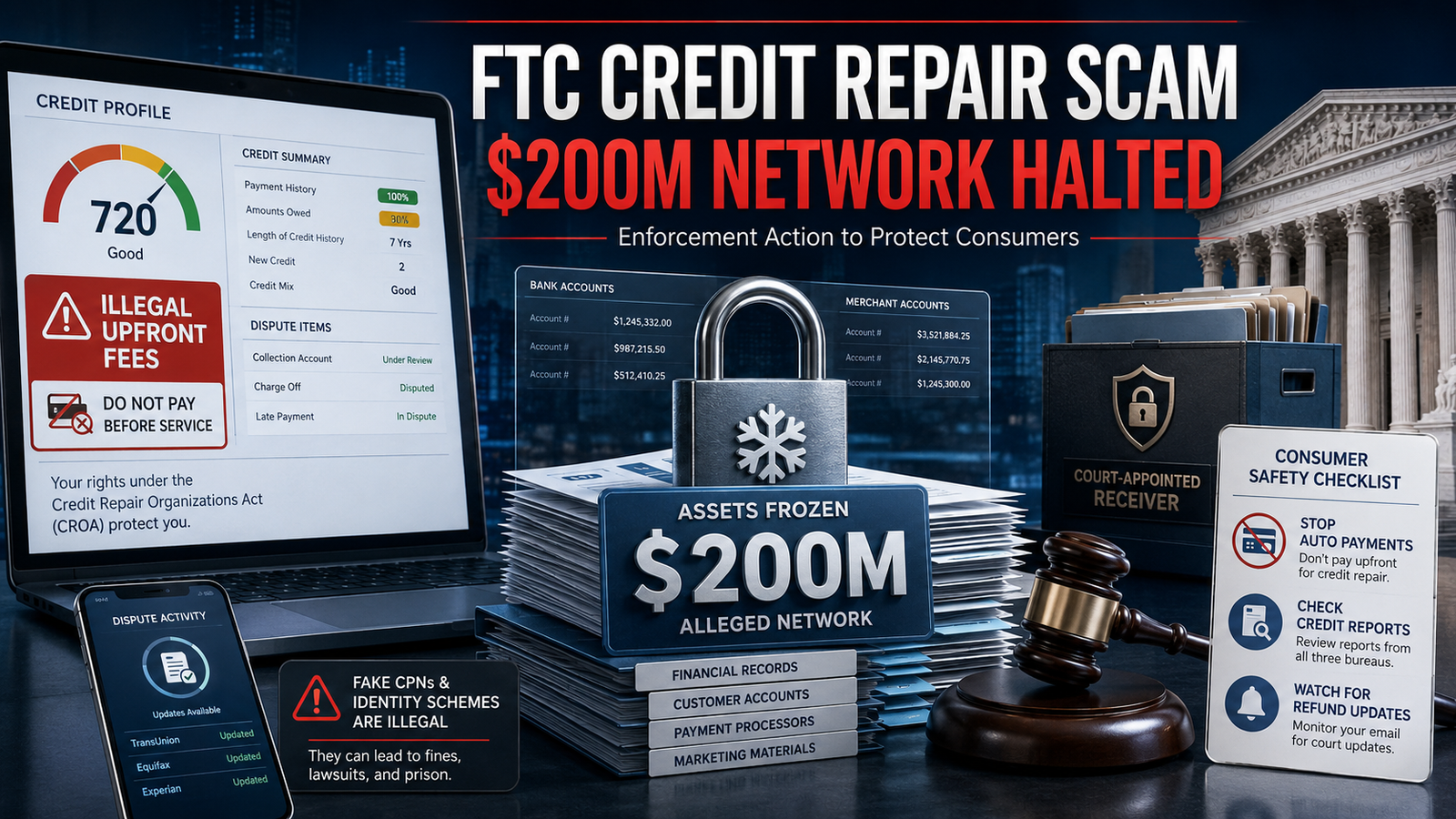
The FTC Credit Glory case targets a network of 17 related companies and five principals that the Federal Trade Commission alleges collected nearly $200 million through unlawful upfront and recurring credit-repair charges. At the FTC’s request, a federal court temporarily halted the operation while the lawsuit proceeds.
Key Facts
- The FTC announced the Credit Glory action on August 10, 2026.
- The FTC says a federal court temporarily halted the operation.
- The complaint names 17 related companies and five individual defendants.
- The FTC alleges consumers were charged nearly $200 million through unlawful upfront and recurring charges.
- The FTC case page lists the matter as pending. No consumer refund process has been announced.
What the FTC Alleges
According to the FTC’s August 10 announcement, Credit Glory and related entities allegedly made false or misleading promises about credit repair, impersonated debt collectors and creditors, charged illegal advance fees, and enrolled consumers in recurring subscriptions without adequate consent.
The FTC says the conduct began at least as early as 2016. Those claims are allegations in a pending federal case, not final findings of liability.
What the Nearly $200 Million Figure Means
The FTC describes nearly $200 million as the amount consumers were allegedly charged through unlawful upfront and recurring charges. It is not an announced refund fund, final judgment, or guaranteed amount available for restitution.
That distinction matters because a temporary court order can preserve assets and stop alleged conduct while a case proceeds, but it does not by itself establish how much money will ultimately be available to consumers.
Current Case Status
The FTC’s Credit Glory case page lists the matter as pending. The August 10 timeline includes the complaint and court order.
The court’s temporary action should not be described as a permanent final ban unless a later order establishes that result.
What Consumers Should Do
- Do not pay anyone who promises access to an FTC refund. No Credit Glory refund process is currently announced.
- Review recurring charges. If you believe a charge is unauthorized, contact the payment provider promptly and ask about available dispute options.
- Save records. Keep contracts, ads, emails, billing statements, cancellation requests, and payment confirmations.
- Check credit reports through the federally authorized source. Use AnnualCreditReport.com.
- Follow the official FTC case page. If refunds are later authorized, the FTC will publish instructions through official channels.
Credit Repair Fees and Consumer Caution
Credit-repair services cannot lawfully promise to remove accurate negative information simply because it hurts a credit score. Consumers should be wary of guarantees, demands for prohibited advance payment, or instructions to misrepresent identity information on a credit application.
Bottom Line
The FTC has obtained temporary relief against Credit Glory and related defendants, and the agency alleges nearly $200 million in unlawful charges. The case remains pending. Consumers should follow the official docket and FTC case page rather than assume that a final judgment or refund program already exists.
This article provides general news and consumer information. Allegations in the FTC complaint have not been converted into final findings unless a court order specifically establishes them.
Official Source Stack
Direct sources supporting the material claims in this report.
- Official agency release FTC's August 10 announcement
- Official agency release Credit Glory case page
- Official agency release AnnualCreditReport.com
This report provides general news and educational information for a U.S. audience. It is not individualized financial, credit, legal, tax, insurance or investment advice. Verify current procedures through the linked official sources.