Updated: August 20, 2026
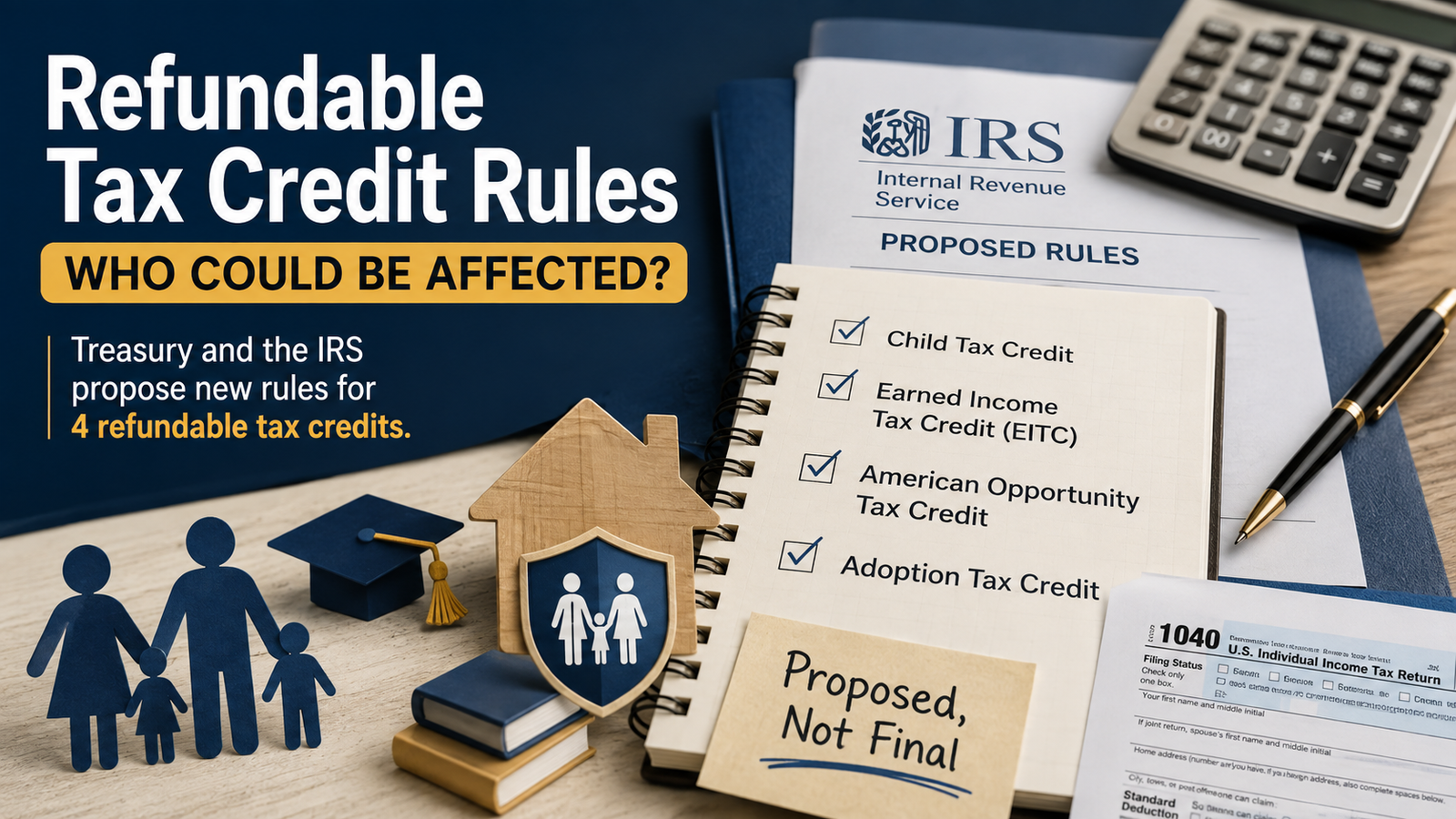
Treasury and the IRS have proposed new refundable tax credit rules that could change who may receive the refunded portion of four federal credits. The proposal is not final and does not create a new filing requirement today.
Key Facts
- The proposal covers the adoption tax credit, Child Tax Credit, American Opportunity Tax Credit and Earned Income Tax Credit.
- It would apply federal public-benefit eligibility rules under the Personal Responsibility and Work Opportunity Reconciliation Act of 1996, or PRWORA, to the refunded portion of those credits.
- A taxpayer receiving the refunded portion would generally need to be a U.S. citizen, U.S. national or “qualified alien” under PRWORA when first filing the return that claims the credit.
- The rules are proposed, not final. Comments are due October 5, 2026, and a public hearing is scheduled for October 14.
What Happened
The U.S. Department of the Treasury and Internal Revenue Service announced the proposal on August 19, 2026. The proposed regulations were published in the Federal Register on August 20.
The rulemaking would classify the refunded portion of four refundable individual income tax credits as a “Federal public benefit” under PRWORA. Treasury says the proposal follows legal analysis from the Justice Department’s Office of Legal Counsel concerning how PRWORA applies to refundable credits.
Readers can review Treasury’s August 19 announcement and the full proposed rule in the Federal Register.
What the Proposed Refundable Tax Credit Rules Actually Say
The proposal focuses on the amount of an affected refundable credit that exceeds a taxpayer’s federal income tax liability. That excess can become an overpayment available for refund, credit against federal tax debt or certain other offsets.
Under the proposal, an individual would need to be a U.S. citizen, U.S. national or a “qualified alien” under PRWORA on the date the person first files the federal return claiming the affected credit. The Federal Register lists lawful permanent residents, refugees, asylees and several other groups within the statutory qualified-alien definition.
The taxpayer would also have to make a declaration under penalty of perjury on the return or an IRS-prescribed schedule. The IRS says it intends to update forms and instructions if the requirement becomes applicable.
Who Could Be Affected
The four affected credits are the adoption tax credit, the Child Tax Credit, the American Opportunity Tax Credit and the Earned Income Tax Credit. Each has separate eligibility rules that would continue to apply.
For married couples filing jointly, the proposal provides an important distinction: only one spouse would need to be a U.S. citizen, U.S. national or qualified alien for the couple to receive the refunded portion, assuming the couple otherwise qualifies for the credit.
Treasury and the IRS estimate that about 200,000 to 700,000 taxpayers could be ineligible to receive the refunded portion under the proposal for tax year 2026. The agencies say they cannot precisely estimate the dollar amount because they do not have data identifying taxpayers’ PRWORA qualified-alien status.
What Would Change — and What Would Not
The most important distinction is that the proposal does not automatically eliminate the entire tax credit for every affected taxpayer. It applies to the refunded portion treated as a federal public benefit.
A person who does not qualify for that refunded portion may still be able to use an otherwise allowable part of the credit to reduce federal income tax liability.
The proposal also does not cover every refundable federal tax credit. The Federal Register says these regulations would not apply PRWORA to the Premium Tax Credit under this rulemaking, and Treasury plans separate regulations for the Saver’s Match.
Nothing changes solely because the proposal was published. The refundable tax credit rules would apply only to tax years ending on or after the date final regulations are published in the Federal Register.
What Consumers Should Do Now
- Do not change a filed return based only on this proposal. It is not a final rule.
- Check your current credit eligibility separately. The IRS maintains official information on individual tax credits and their existing requirements.
- Keep eligibility records. Taxpayers claiming credits should retain the documents normally used to support income, dependents, education costs or adoption expenses.
- Watch the final rulemaking. If Treasury and the IRS finalize the proposal, updated forms and instructions could explain any new declaration requirement.
- Use the public-comment process if relevant. Written and electronic comments on the proposed rule are due October 5, 2026. The Federal Register page provides submission instructions.
Consumer Impact and Unanswered Questions
The proposal could matter most for taxpayers who otherwise satisfy the tax-code requirements for one of the four credits but do not meet PRWORA’s eligibility standard for receiving the refunded portion.
Several practical details remain unresolved because the rule is not final. The final publication date will determine when the rules begin applying, and the IRS has not yet issued final revised forms for the proposed declaration.
Treasury and the IRS may also change provisions after reviewing public comments. The Federal Register sets October 5, 2026, as the comment deadline and schedules a public hearing for October 14.
Bottom Line
The Treasury-IRS proposal would add PRWORA eligibility requirements to the refunded portion of four major tax credits, not automatically to every dollar of each credit. The distinction matters for families, workers, students and adoptive parents who may claim these credits.
For now, taxpayers should follow current IRS filing rules and monitor the rulemaking rather than assuming the proposal is already effective.
This article provides general news and educational information for a U.S. audience. It is not individualized tax, legal or immigration advice. Eligibility depends on the facts of each taxpayer’s situation and current federal law.
Official Source Stack
Direct sources supporting the material claims in this report.
- Official agency release Treasury’s August 19 announcement
- Regulation or statute full proposed rule in the Federal Register
- Official agency release official information on individual tax credits
This report provides general news and educational information for a U.S. audience. It is not individualized financial, credit, legal, tax, insurance or investment advice. Verify current procedures through the linked official sources.