Updated
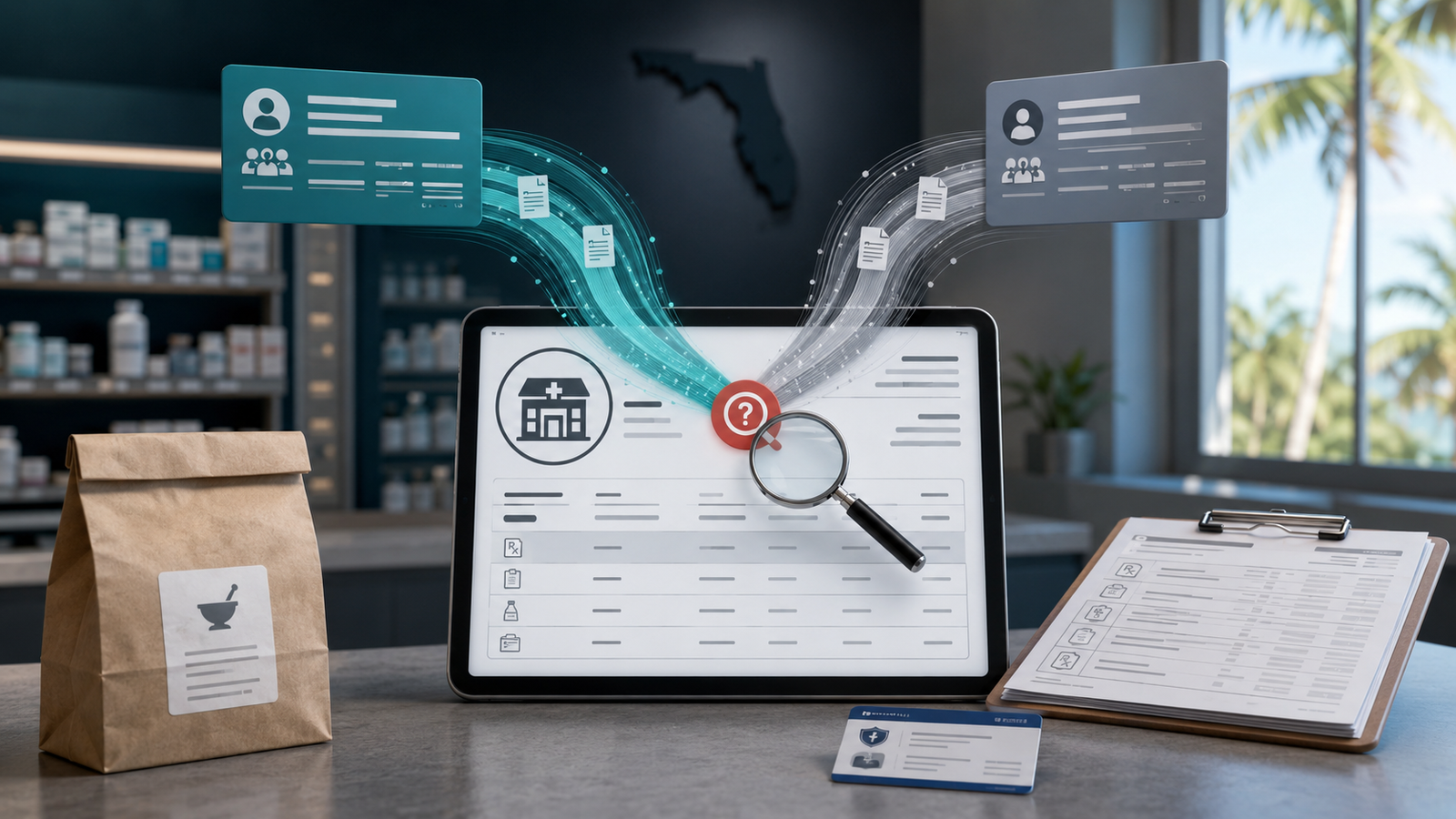
The Florida PBM lawsuit filed August 27, 2026 accuses Prime Therapeutics LLC and Express Scripts, Inc. of unlawfully coordinating reimbursement rates paid to pharmacies. Florida alleges the arrangement reduced payments to independent pharmacies and could threaten patients’ access to local prescription services. Prime and Express Scripts dispute the allegations. Neither company has been found liable, and no patient refund, immediate copay change or consumer claims program has been announced.
Key Facts
- Florida Attorney General James Uthmeier filed the civil lawsuit on August 27, 2026 in the Tenth Judicial Circuit in Polk County.
- Florida challenges a collaboration announced by Prime Therapeutics and Express Scripts in December 2019 that allegedly took effect in April 2020 and remains in effect.
- The state says reimbursement declined for around 80% of branded drugs and 70% of generic drugs after the arrangement.
- Florida alleges Prime valued the first three years of the collaboration at approximately $2.5 billion in “cost savings.” That figure is not a court-awarded damages amount or consumer fund.
- Prime and Express Scripts deny wrongdoing.
- No judgment, patient refund program, pharmacy restitution fund or consumer claims deadline has been announced.
What Happened in the Florida PBM Lawsuit
Florida Attorney General James Uthmeier filed the lawsuit against Prime Therapeutics and Express Scripts, two major pharmacy benefit managers, or PBMs.
The Florida Attorney General’s August 27 announcement alleges that the companies entered an illegal horizontal price-fixing agreement affecting reimbursement rates paid to pharmacies.
According to Florida, Prime and Express Scripts were competitors when they announced a collaboration in December 2019.
The state alleges that Prime subsequently adopted significantly lower Express Scripts reimbursement models and network pricing rules beginning in April 2020.
The arrangement allegedly has been extended multiple times and remained in effect when Florida filed the lawsuit.
The lawsuit is a civil complaint. Florida must prove its allegations, and both defendants can challenge the state’s factual and legal claims.
What Pharmacy Benefit Managers Do
Pharmacy benefit managers operate between health plans, drug manufacturers and pharmacies.
PBMs can negotiate pharmaceutical rebates, administer prescription benefits, maintain pharmacy networks, process prescription claims and influence the reimbursement pharmacies receive.
The Federal Trade Commission’s PBM research has examined how large pharmacy benefit managers can influence drug prices, pharmacy access and the economics of independent pharmacies.
The FTC has separately reported that PBM reimbursement methods can be complex and that major PBMs exercise substantial influence over unaffiliated pharmacies.
What Florida Alleges About Prime and Express Scripts
Florida argues that Prime and Express Scripts should have competed independently when establishing pharmacy reimbursement terms.
Instead, the Attorney General alleges that Prime adopted Express Scripts’ lower reimbursement approach through their collaboration.
The state characterizes the arrangement as horizontal price fixing and alleges violations of Florida antitrust and consumer-protection law.
Florida is seeking remedies that include injunctive relief, civil penalties, disgorgement, damages and other relief.
Those requested remedies are not the same thing as relief already awarded by a court.
What the 80% and 70% Figures Actually Mean
The numbers in Florida’s announcement require careful wording.
The state says reimbursement rates declined for around 80% of branded drugs and 70% of generic drugs after the challenged arrangement.
That does not mean reimbursement on every branded prescription fell by 80% or reimbursement on every generic prescription fell by 70%.
The figures describe the share of drugs for which Florida alleges reimbursement declined.
They do not establish one universal percentage reduction across all prescriptions or pharmacies.
Florida Cites Specific Pharmacy Examples
The Attorney General’s allegations include examples of individual pharmacies that allegedly experienced substantial reimbursement reductions.
Florida says one pharmacy outside Orlando experienced a 45% reimbursement decrease on one medication, turning what had been a profitable fill into a $15.45 loss per prescription.
Examples involving particular prescriptions do not establish that every Florida pharmacy experienced the same financial effect.
They are examples Florida is using to support its broader allegations and remain subject to litigation.
What the $2.5 Billion Figure Means
The Attorney General’s office says Prime valued the first three years of the collaboration at approximately $2.5 billion in “cost savings.”
Florida characterizes those savings as money extracted from pharmacies through lower reimbursement.
The defendants dispute Florida’s characterization of the arrangement.
The $2.5 billion should not be described as:
- a court finding;
- an established loss suffered by Florida consumers;
- a damages award;
- a restitution order; or
- a patient refund fund.
Prime Therapeutics Disputes Florida’s Claims
Prime Therapeutics has rejected Florida’s characterization of the collaboration.
In a public response reported after the lawsuit was filed, Prime said the complaint focuses on pharmacy profitability without adequately considering costs ultimately paid by patients, employers, health plans and taxpayers.
Prime says its approach has generated lower costs for patients at the pharmacy counter and savings for individuals, employers and health plans while maintaining broad pharmacy access.
Those statements represent Prime’s position in the dispute and do not resolve Florida’s allegations.
Express Scripts Also Denies Wrongdoing
Express Scripts also disputes the lawsuit.
Evernorth, its parent organization, called the allegations baseless and said Express Scripts is committed to fairly reimbursing network pharmacies.
The company says health-plan clients select pharmacy networks according to factors including geography, demographics and the needs of the populations they cover.
Whether the challenged collaboration violates Florida law will ultimately depend on the litigation rather than either side’s public statements.
What the Florida PBM Lawsuit Could Mean for Patients
The immediate dispute primarily concerns reimbursement paid to pharmacies.
That is different from the amount a patient personally pays at the pharmacy counter.
A prescription transaction may involve:
- the patient’s copay or coinsurance;
- payments from the health plan or PBM;
- the pharmacy’s drug-acquisition cost;
- dispensing expenses; and
- other contractual adjustments.
A pharmacy therefore can claim that total reimbursement is insufficient even when a patient’s copay remains unchanged.
Conversely, increasing reimbursement to a pharmacy would not automatically reduce the patient’s copay.
Why Florida Says Local Pharmacy Access Is at Risk
Florida’s consumer-access theory is indirect.
The state argues that repeatedly reimbursing independent pharmacies below sustainable levels can place financial pressure on those businesses.
If pharmacies reduce services, leave networks or close, patients could have fewer nearby options for filling prescriptions.
This issue may be particularly relevant to patients who rely on local pharmacies because of age, transportation limitations, rural location or recurring medication needs.
The lawsuit, however, does not by itself prove that a particular pharmacy closure or patient-access problem was caused by the Prime–Express Scripts agreement.
What Has Not Changed for Florida Patients
The filing of the lawsuit does not immediately change a person’s prescription benefits.
No court has ordered Prime or Express Scripts to alter pharmacy reimbursement rates.
The lawsuit also does not automatically change:
- patient copays or coinsurance;
- insurance deductibles;
- drug formularies;
- prior-authorization rules;
- preferred-pharmacy networks;
- Medicare Part D plan terms; or
- existing prescriptions.
Those matters continue to depend on the patient’s health plan, pharmacy network and applicable coverage rules unless a separate change occurs.
There Is No Patient Refund Program
The Florida PBM lawsuit has not created a consumer settlement or refund process.
There is currently no announced:
- patient claim form;
- consumer eligibility list;
- individual refund amount;
- restitution portal; or
- payment deadline.
Consumers should be suspicious of messages claiming that Florida PBM lawsuit money is available if they first provide bank information, Social Security numbers, passwords or an upfront processing fee.
What Florida Patients Should Do Now
- Do not change medication because of the lawsuit. Medication decisions should be discussed with the prescribing clinician.
- Check pharmacy network status. Before an important refill, confirm with both the pharmacy and health plan whether the location remains in network and whether it is preferred.
- Compare available prices. Ask about the insurance price, permitted cash price and appropriate generic or therapeutic alternatives when relevant.
- Keep records of access problems. Save rejected claims, transfer notices, receipts, pharmacy messages and plan communications.
- Ask for an explanation. When coverage or network status changes, request the reason from the plan or PBM in writing when possible.
- Escalate unresolved problems. Use Florida’s official insurance or PBM complaint channels when a qualifying issue cannot be resolved directly.
Medicare Patients Should Compare Pharmacy Costs Carefully
People enrolled in Medicare prescription coverage can use the official Medicare Plan Compare tool when comparing estimated drug costs among pharmacies.
Preferred and nonpreferred pharmacy arrangements can affect out-of-pocket costs even when the medication itself does not change.
Consumers should verify current plan information rather than assuming the Florida lawsuit immediately modifies a Medicare network.
Florida Complaint Resources
Florida consumers with an insurance or prescription-benefit issue can request assistance through the Florida Department of Financial Services consumer assistance service.
General allegations of unfair or deceptive business conduct may also be submitted through the Florida Attorney General’s consumer complaint process.
Florida maintains a separate PBM complaint resource for pharmacies.
Florida DFS says its PBM oversight includes specified pharmacy-contract, authorization, disclosure and prohibited-practice requirements.
Submitting a complaint does not guarantee reimbursement, damages or participation in the Attorney General’s lawsuit.
Florida PBM Lawsuit FAQ
Who did Florida sue?
Florida Attorney General James Uthmeier sued Prime Therapeutics LLC and Express Scripts, Inc.
When was the Florida PBM lawsuit filed?
The state filed the lawsuit on August 27, 2026 in the Tenth Judicial Circuit in Polk County.
Have Prime or Express Scripts been found liable?
No. The lawsuit is pending, and the allegations have not been established through a final judgment.
Did pharmacy reimbursement fall by 80% and 70%?
Not in the way that wording might imply. Florida says reimbursement declined for around 80% of branded drugs and 70% of generic drugs. The figures describe the share of drugs allegedly affected, not a universal 80% or 70% reduction in reimbursement amounts.
Is the alleged $2.5 billion available to consumers?
No. Florida says Prime valued the first three years of the arrangement at approximately $2.5 billion in cost savings. That is not a patient refund fund or court-awarded damages amount.
Will patient copays change now?
No automatic copay change was announced because of the lawsuit. Patient costs continue to depend on the applicable health plan and pharmacy-benefit terms.
Can patients submit a lawsuit claim?
No public patient claims portal or consumer compensation program has been announced in connection with the August 27 filing.
Bottom Line
The Florida PBM lawsuit alleges that Prime Therapeutics and Express Scripts coordinated pharmacy reimbursement rather than competing independently.
Florida says the arrangement lowered reimbursement for large shares of branded and generic drugs and put pressure on independent pharmacies. The defendants dispute those allegations and say their practices support affordability and pharmacy access.
The case remains at the lawsuit stage. No liability judgment, patient refund, restitution program or automatic prescription-benefit change has been established.
Patients should continue using existing medical and insurance guidance, verify pharmacy network status, document prescription-access problems and use official Florida assistance channels when an issue cannot be resolved.
How We Verified This Report
Jurisdiction: Florida, United States
Case status: Civil enforcement lawsuit filed; no liability determination announced
Official action date: August 27, 2026
Last fact-checked: September 1, 2026
Primary and Supporting Sources
- Florida Attorney General — August 27, 2026 Prime Therapeutics and Express Scripts lawsuit announcement
- Federal Trade Commission — Pharmacy Benefit Managers Staff Report
- Florida Department of Financial Services — Pharmacy Benefit Manager Complaint Resources
- Medicare — Plan Compare
Defendant Responses
Prime Therapeutics and Express Scripts have publicly disputed Florida’s allegations. Their responses are included to distinguish the state’s allegations from established findings.
Editorial Review
This report distinguishes allegations about pharmacy reimbursement from patient out-of-pocket costs. It also treats the 80% and 70% figures as the shares of drugs for which Florida alleges reimbursement declined, rather than as the size of a universal reimbursement reduction.
Important Information
This article provides general consumer information and is not individualized legal, medical, insurance or financial advice. Coverage, pharmacy access, reimbursement, complaint rights and potential relief depend on health-plan terms, individual facts and future court proceedings.
Official Source Stack
Direct sources supporting the material claims in this report.
- Official agency release FTC’s pharmacy benefit manager report
- Court filing or order Florida Courts system explains
- Official agency release Medicare Plan Compare tool
This report provides general news and educational information for a U.S. audience. It is not individualized financial, credit, legal, tax, insurance or investment advice. Verify current procedures through the linked official sources.