Updated: August 20, 2026
A New Hampshire auto insurance cancellation over nonpayment cannot simply be backdated to the day a renewal premium was missed. The New Hampshire Insurance Department issued a bulletin on August 19, 2026, reminding insurers about state notice requirements when an auto policy is terminated for nonpayment around renewal.
Key Facts
- The New Hampshire Insurance Department announced the auto-policy bulletin on August 19, 2026.
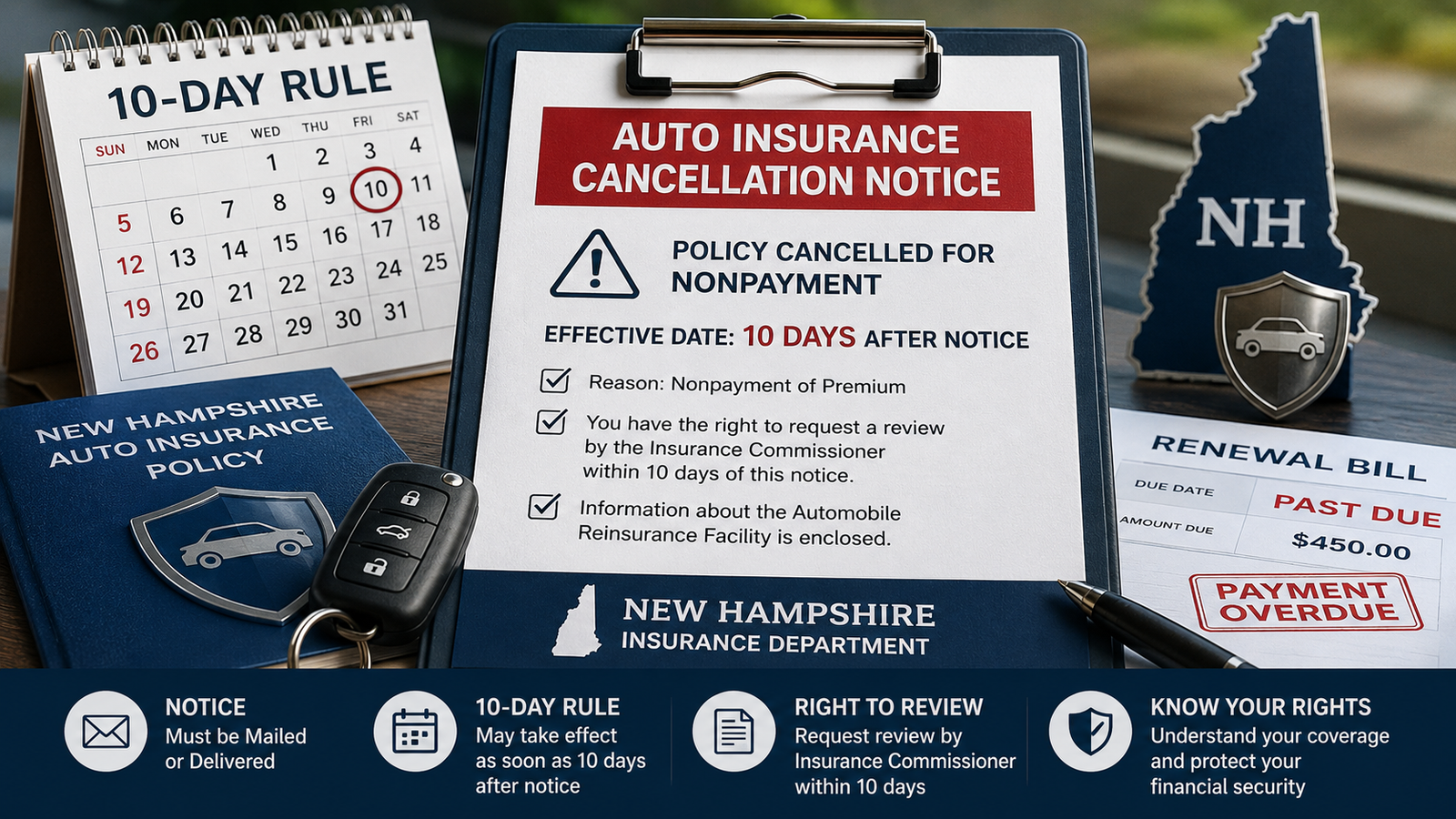
- For nonpayment, an auto insurance cancellation or nonrenewal notice may take effect as soon as 10 days after the notice is mailed or delivered.
- State law says a nonpayment notice cannot be issued until nonpayment has actually occurred.
- The notice must state the reason and tell the policyholder about the right to request Insurance Commissioner review.
- The bulletin is regulatory guidance about existing state requirements; it is not a nationwide insurance rule.
What Happened
The New Hampshire Insurance Department issued a bulletin addressing auto policy termination for nonpayment at renewal. The Department’s announcement focuses on how insurers apply existing state law when a customer does not pay a renewal premium on time.
The New Hampshire Insurance Department bulletin announcement was published August 19.
The development matters because the timing of a missed renewal payment, a cancellation notice and the policy’s termination date are not necessarily the same thing.
What New Hampshire Auto Insurance Cancellation Law Says
New Hampshire RSA 417-A:5 sets the notice rules for cancellation and refusal to renew private auto insurance policies.
Under the official New Hampshire automobile insurance notice statute, the normal effective date for cancellation or nonrenewal is at least 45 days after notice is mailed or delivered.
Nonpayment is different. When cancellation or nonrenewal is based on unpaid premium, the effective date may be as soon as 10 days after the insurer mails, physically delivers or electronically delivers the notice.
There is an important limitation: the statute says a nonpayment notice cannot be issued until nonpayment has occurred.
In practical terms, an insurer cannot treat a future payment as already missed simply to start the nonpayment-notice clock early.
What Drivers Should Look for in a Nonpayment Notice
RSA 417-A:5 requires more than an effective date. The notice must identify the specific reason for cancellation or refusal to renew.
It must also inform the policyholder about the right to ask the New Hampshire Insurance Commissioner to review the insurer’s action. The statute gives an insured 10 days after receiving the notice to submit that written review request.
Auto-policy notices must also advise the insured about eligibility for coverage through the state’s automobile reinsurance facility.
These requirements make the actual notice worth reading carefully. A billing reminder, renewal offer and formal cancellation notice may have different legal significance.
One Important Exception at Renewal
New Hampshire law contains another provision that can affect how renewal nonpayment is handled.
RSA 417-A:5-a says an insurer may not need to send a separate notice of nonrenewal for nonpayment on certain policies written on a non-continuous basis when the insurer has already shown in writing that it is willing to renew the policy.
That distinction is one reason drivers should not assume every missed renewal payment receives identical treatment. Policy structure, the documents sent by the insurer and the timing of nonpayment can matter.
The Department’s bulletin should therefore be read as clarification of New Hampshire requirements, not as a promise that every driver automatically receives an extra 10 days of coverage after every missed renewal bill.
Paying Before the Termination Date Can Matter
A separate New Hampshire statute provides another consumer protection for nonpayment situations.
Under RSA 402:80 on cancellation for nonpayment, termination is not effective if the insurer or its agent actually receives the premium before the cancellation date and time stated in the notice.
The statute also addresses premiums sent by certified mail before the stated termination date and time.
That does not mean every late payment automatically reinstates a policy after coverage has already ended. Drivers should confirm their policy status directly with the insurer.
What to Do if You Receive a Cancellation Notice
- Read the effective date. Identify the exact date and time the insurer says coverage will end.
- Check the reason. Confirm whether the notice specifically identifies nonpayment of premium.
- Compare the payment history. Save bank records, receipts, renewal bills and confirmation emails showing when payment was due or made.
- Contact the insurer promptly. Ask whether payment can prevent termination and request written confirmation of the policy’s status.
- Do not assume an appeal preserves coverage. New Hampshire law treats nonpayment appeals differently from some other cancellation reviews, so verify whether coverage remains active.
- Request regulatory help when needed. If the notice appears inconsistent with state requirements, contact the New Hampshire Insurance Department promptly.
What the Bulletin Does Not Mean
The August 19 action does not announce a new federal insurance requirement, a consumer refund or an insurer penalty. It also does not establish that any particular insurance company violated New Hampshire law.
The requirements discussed here apply to New Hampshire auto insurance. Drivers in other states should check their own insurance department’s cancellation and renewal rules.
Bottom Line
The New Hampshire auto insurance cancellation rules give nonpayment cases a specific timing framework. A formal nonpayment notice can generally provide a 10-day window, but the insurer cannot issue that notice before nonpayment occurs.
If you receive one, focus on the payment due date, notice date and stated termination date. Keep records and verify directly with the insurer before assuming your coverage remains in force.
For continuing state insurance updates, readers can also follow Fiscal Wire News insurance coverage.
This article provides general news and educational information for a U.S. audience. It is not individualized legal or insurance advice. Policy language and individual circumstances can affect coverage, and consumers should confirm their status with their insurer or the appropriate state regulator.
Official Source Stack
Direct sources supporting the material claims in this report.
- Official agency release New Hampshire Insurance Department bulletin announcement
- Regulation or statute official New Hampshire automobile insurance notice statute
- Official agency release RSA 402:80 on cancellation for nonpayment
This report provides general news and educational information for a U.S. audience. It is not individualized financial, credit, legal, tax, insurance or investment advice. Verify current procedures through the linked official sources.